Film Processing Lab
Develop your own black and white film with tanks, reels and chemistry we provide. Bring your film and your negative sleeves, and we supply the rest.
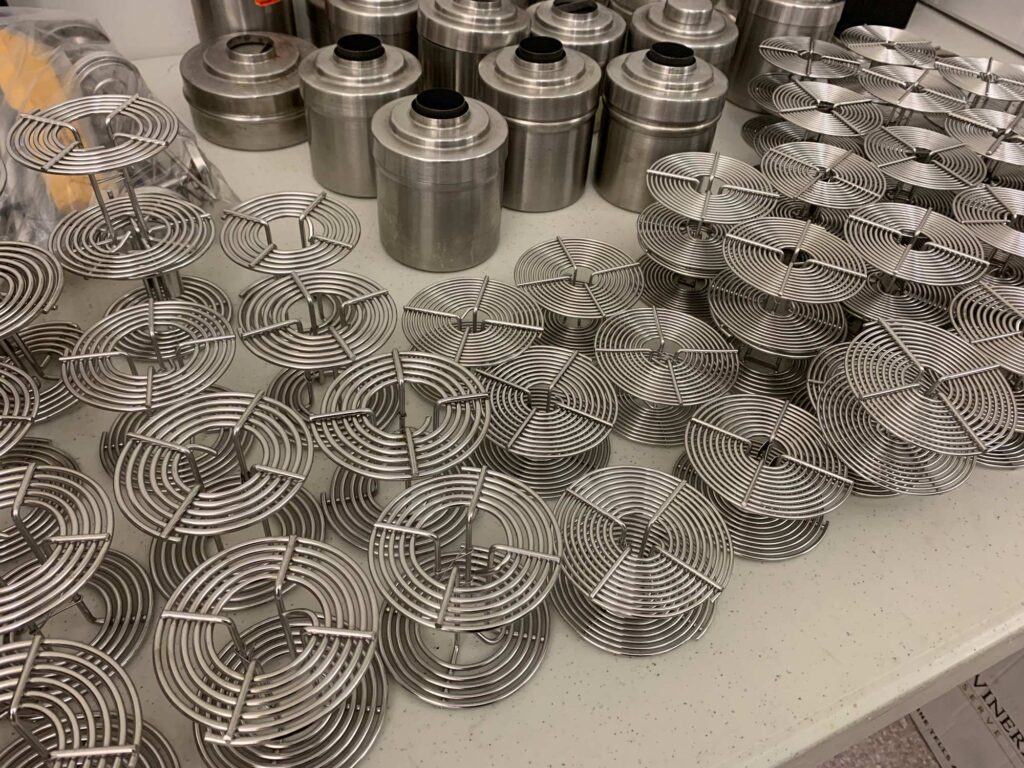
Tanks & reels
Plastic & steel
Paterson, stainless, 4×5 tanks and a Stearman SP-445
Developer
Kodak XTOL
Mixed fresh by staff, best used at 1+1
Open
Tue – Thu 3 – 8 pm
Sat 11 am – 4 pm
Start your last roll by 7 pm, or 3 pm on Saturday
Bring your film and sleeves, we supply the rest
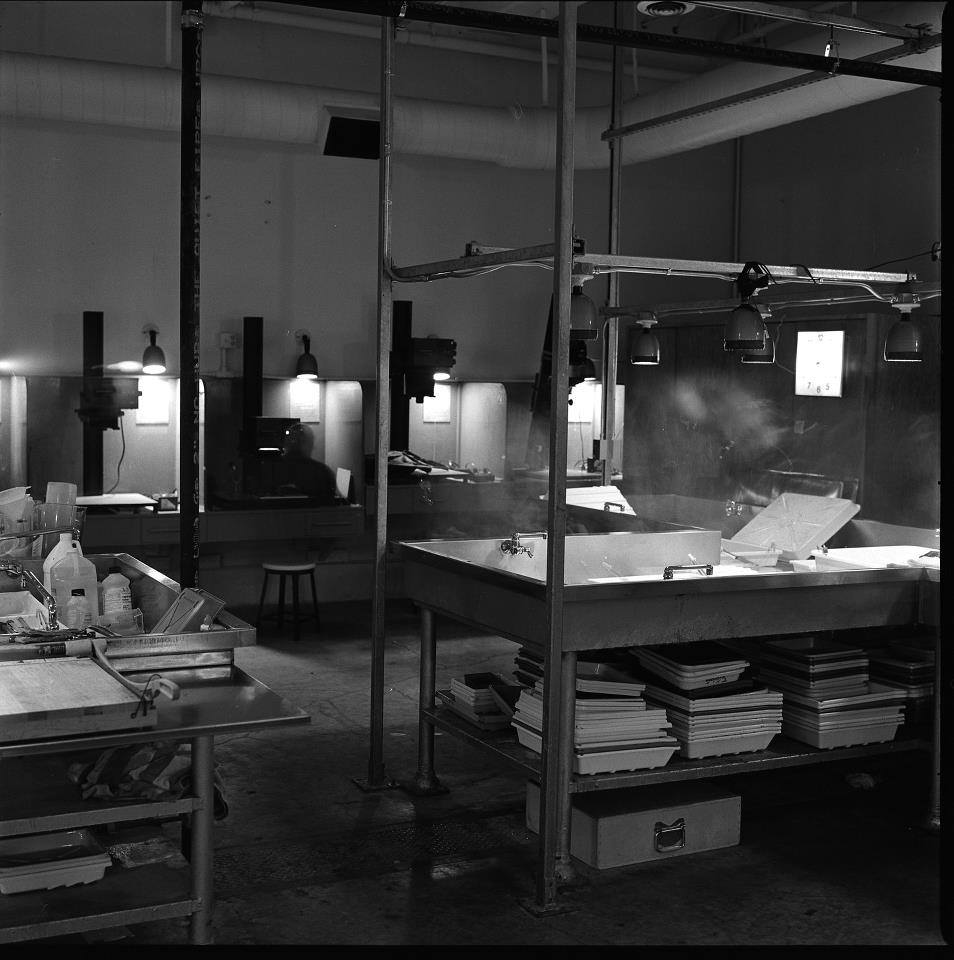
The film room has everything you need to go from an exposed roll to dry negatives: Paterson plastic and stainless steel tanks and reels, large format tanks, graduates for measuring, and chemistry that’s mixed and waiting. Develop as much film as you can in the time you have.
What you bring is your film and your negative sleeves; we don’t sell either. A shelf of donated sleeves sometimes has what you need, but don’t count on it.
Learning to load a reel? There’s practice film at the light tables.
How a developing session works
1Check in
Tell the front desk you’re developing. Don’t take a red flashlight: they are for the printing darkroom, and film is sensitive to red light.
2Load in a changing room
Three rooms go completely dark. Close the door all the way and press the lock button so nobody opens it on you.
3Check the chemistry
Stop bath should be orange or yellow; purple or clear means it’s spent. Test fixer with a few drops of Hypo Check: clear is good, milky means ask staff for a fresh batch. If the developer is running low, tell us.
4Develop, then return what’s reusable
Only developer and Photo-Flo go down the drain. Stop, fixer and PermaWash go back into their jugs, the ones with funnels on top.
5Dry film in the cabinet
Switch the cabinet off and wait 10 seconds for the fan to stop before you open it. Hang your film from a clip with a weight on the bottom, close the door, and set the timer to 15 minutes, or longer if someone else’s film has more time left. Most wet film dries in 15 to 20 minutes.
6Clean up and sleeve
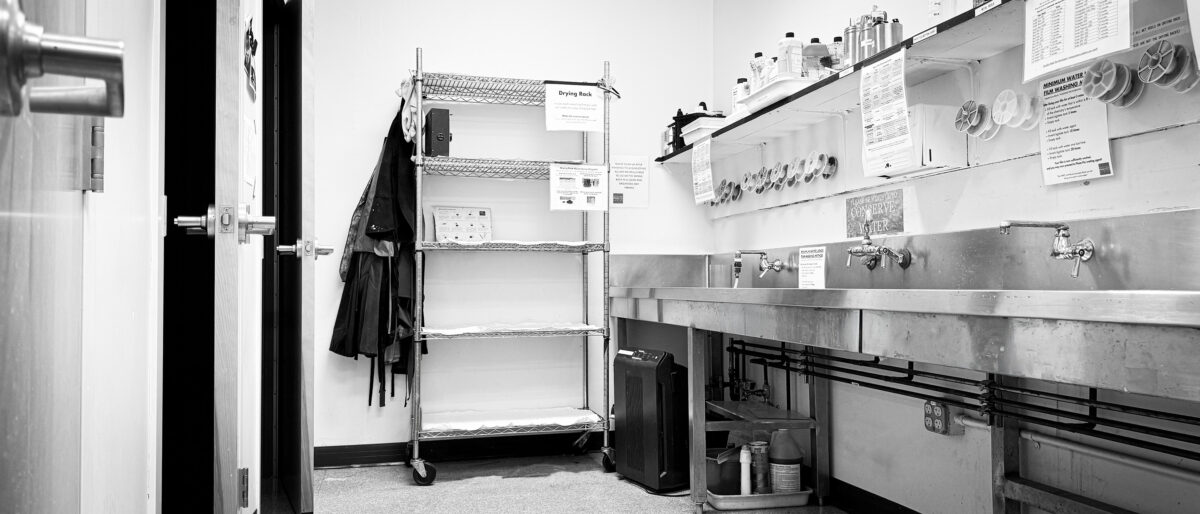
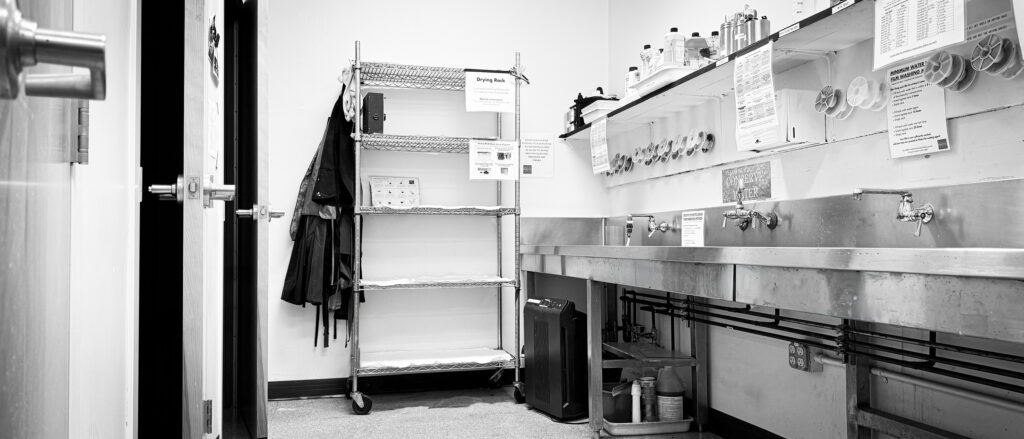
Take reels apart, rinse everything in plain water (no soap needed) and leave it on the drying rack. Nothing wet goes back on the shelf. Then you can cut and sleeve your film at the light tables.
What’s in the lab
Tanks & reels
Paterson plastic tanks with all their parts, plastic and stainless steel reels, large format tanks, and a Stearman Press SP-445 Compact for 4×5.
Chemistry
Kodak XTOL developer, Kodak Indicator Stop, Ilford Rapid Fixer and Heico PermaWash, mixed by staff and ready to use, plus measuring graduates.
Changing rooms
Three completely dark rooms, for loading film or processing large format in trays.
Drying cabinet
Dries film in 15 to 20 minutes. Clips for hanging film are kept next to it.
Light tables
Loupes, scissors, cotton gloves, air blowers and cleaning cloths for cutting, sleeving and inspecting negatives.
Odds and ends
Scissors and film canister openers on strings in the film changing rooms. Lost negatives turn up in the abandoned-negatives box by the light tables.
Before you come
Orientation first
Take the orientation, then develop on a membership or a day pass.
Bring film and sleeves
We supply tanks, reels and chemistry, but not film or negative sleeves.
Black and white only
No color film, even with your own chemistry.
More than 8 rolls?
Dilute the XTOL further than 1+1, or bring your own developer.
Lab rules
- Never pour stop, fixer or PermaWash down the drain. Fixer in particular is bad for the environment. If a jug is spent, tell staff and they will replace it and dispose of it properly.
- Don’t start developing less than an hour before closing.
- Don’t force a plastic reel. If it won’t go back together, it’s probably the wrong way round. Ask.
- Switch the drying cabinet off for 10 seconds before you open it, so you don’t blow dust onto anyone’s half-dry film.
- Clips go back in the clip can.
- Clean up after yourself and go easy on shared supplies.
- Don’t leave film scraps or clips on the light tables.
How to get into the lab
Everyone starts with the Photo Center orientation. After that, work here on a membership, or pay for a single day.